Call for Session Proposals
Deadline: March 25th, 2026 | 5 P.M.
About the Summit
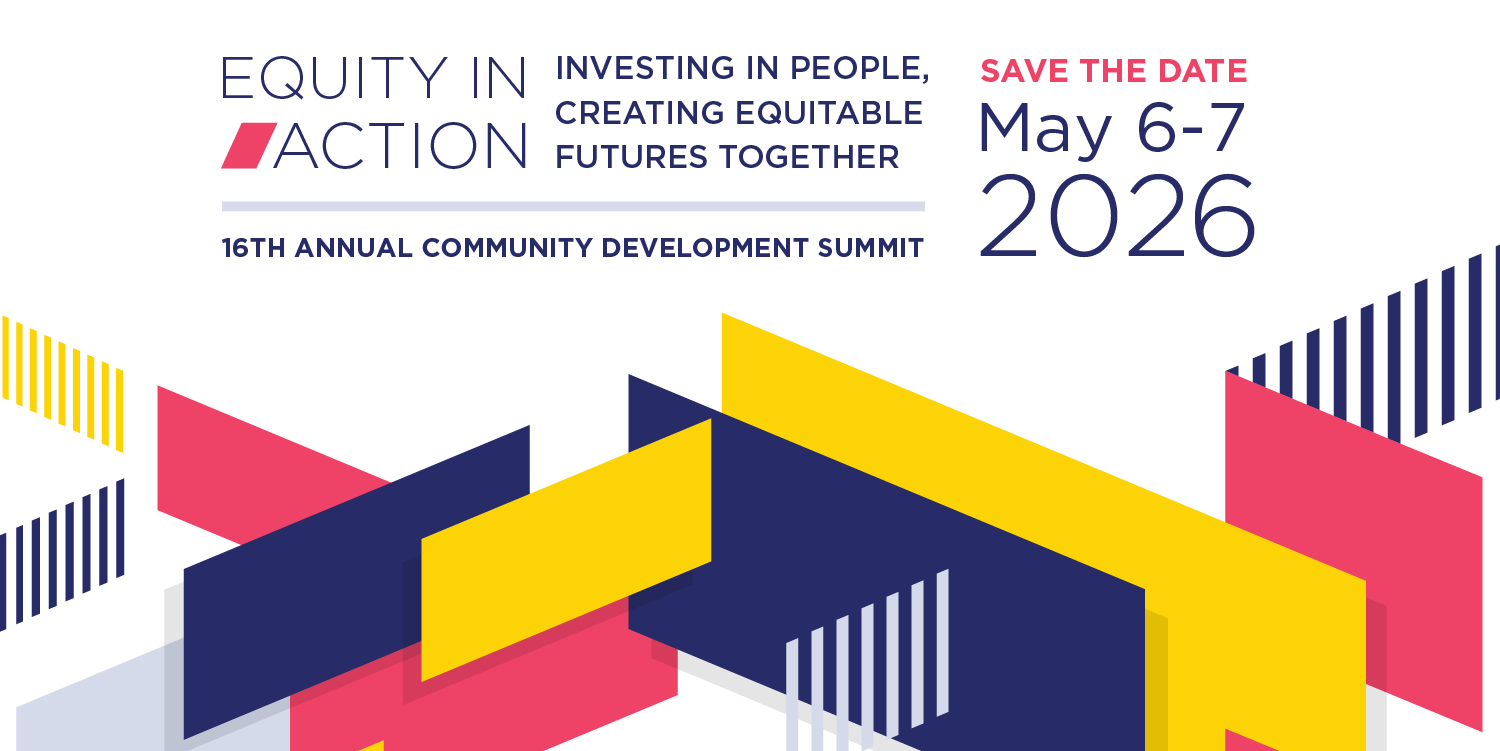
Pittsburgh Community Reinvestment Group (PCRG) and Urban Land Institute – Pittsburgh District Council (ULI) invite you to submit a proposal for the 16th Annual Community Development Summit, taking place May 6 and 7 at Pittsburgh’s Rivers Casino Events Center.
This two-day, in-person event brings together 600+ practitioners, nonprofit leaders, policymakers, funders, developers, students, advocates, and public sector partners from across the Great Lakes and Mid-Atlantic regions.
We’re seeking 12 breakout sessions and 2 plenary panels that reflect the diversity, complexity, and urgency of today’s community and economic development landscape.
2026 Theme: Equity in Action
This year’s Summit focuses on moving equity from intention to implementation. We are seeking sessions that demonstrate how equity is being actively applied by:
Addressing systemic barriers rather than surface-level symptoms
Tailoring strategies to meet different community needs
Advancing structural change within policies, institutions, and markets
Learning openly from both success and failure
We are particularly interested in proposals that show how equity is operationalized in practice, not just discussed conceptually.
Who Attends?
Summit attendees represent the full community development ecosystem, including:
Community-based organizations and CDCs
Nonprofit and for-profit developers
Bankers and financial institutions
Philanthropy and intermediaries
Government leaders and policymakers
Residents, advocates, and organizers
Students and emerging professionals
Sessions should be designed for practitioners seeking practical tools, lessons learned, and strategies they can apply in their own communities.
About PCRG
Founded in 1988, PCRG works to eliminate lending and investment disparities in low-income and historically underserved communities across the Allegheny region. Through research, advocacy, education, and regional membership, PCRG. builds the capacity of community development leaders to advance racial and economic equity. PCRG’s work spans housing, blight remediation, infrastructure, mobility, community banking, asset creation, and fair lending — grounded in a commitment to homeownership, entrepreneurship, and wealth-building as pathways to stability and opportunity.
Topic Areas
Successful sessions should answer a key question, address one of the numbered topic areas, or both.
Key Questions:
How do you successfully launch a new initiative or program, and what early steps set it up for long-term impact?
How do you build on initial momentum and scale your success over time?
What worked well—and what didn’t—and what lessons did you take from those experiences?
How do you assess when something isn’t working, and what strategies do you use to adapt or correct course?
Community & Economic Development
How can local policies, zoning, and ordinances be leveraged to strengthen communities?
What does effective, real-world neighborhood planning and implementation look like block by block?
What will future business districts look like and require to fuel growth and sustainability?
How can we meaningfully engage youth and cultivate the next generation of Community Development leaders?
What is the evolving role of housing authorities in meeting affordable rental and homeownership needs?
With a national shortage of 7.1 million units of affordable workforce housing, how effective is the Low-Income Housing Tax Credit Program (LIHTC) today — and what has been its neighborhood-level impact?
Economic Mobility, Wealth Advancement & Opportunities
Financial education strategies and programs that move individuals and families toward creating savings and investment strategies that reduce financial emergencies, debt burdens, and move low- and moderate-income residents toward stability, homeownership, and entrepreneurship
Innovative pathways to remove homeownership barriers for low- and moderate-income families.
Inclusion and belonging strategies in under-resourced communities.
Effective Workforce education and training initiatives models addressing future pipeline shortages
Innovative bank-community partnerships advancing economic mobility.
Mentorship and capacity-building initiatives for Black and minority developers.
Holistic programming that supports resident well-being, including reducing stigma around mental health resources.
The Future of Community Organizations
How are shifts in government, philanthropy, and corporate investment reshaping access to capital for community development?
How should we communicate community development in the era of social media and shrinking journalism?
Can strategic mergers in the community development sector result in long-term impact?
How can community organizing models promote inclusive engagement across stakeholders.
How do we support residents to thrive and remain in emerging mixed-income communities?
Proposals that address topics beyond those listed above must clearly demonstrate how the session advances equity, expands access to opportunity, and strengthens underserved communities.
All submissions should align with PCRG’s mission and highlight practical lessons learned through real-world implementation. Priority will be given to sessions grounded in the work of nonprofits, government agencies, grassroots and activist groups, block watches, businesses, foundations, or cross-sector partnerships.
Proposals may also examine how local and regional collaboration, as well as state and federal policies, shape community and economic development. Relevant policy areas include — but are not limited to — the Community Reinvestment Act (CRA), the Fair Housing Act, the Neighborhood Assistance Program (NAP), Community Development Block Grants (CDBG), public budgets, land banking, community land trusts, and minority homeownership initiatives.
Proposal Criteria & Selection Process – Please read carefully
A cross-sector review committee will evaluate proposals and select 12 breakout sessions and 2 plenary panels.
Strong proposals will:
Provide practical tools, case studies, or applied research to inform attendees’ work
Clearly articulate what attendees will learn
Include diverse perspectives across geography, race, gender, sector, and lived experience
Present ideas that can be adapted or replicated
Avoid promotional or marketing content. PCRG may request revisions or recommend combining similar proposals.
Values We Center
We prioritize sessions that:
Embrace coalition-building and collective impact when addressing systemic issues.
Elevate diverse leadership
Share lessons learned, including challenges
Address complex topics with nuance, honesty, and vulnerability
Center both place-based and people-based investments.
Session Format & Logistics
Length: 75 minutes
Audience Size: Up to 100 attendees
Speakers: Maximum 4 speakers (including moderator)
Formats may include:
Panel presentations
Roundtables
Hands-on workshops
Debates
Interactive models (World Café, facilitated discussions)
Submission Requirements
Each proposal must include:
Session title (maybe edited for clarity)
Session description (maximum 100 words)
Three learning objectives* (maximum 30 words each)
Complete contact information for session organizer* and all session presenters
Presenter bios and headshots
* Learning objectives must clearly state the knowledge or skills attendees will gain.
* The session organizer will be responsible for communicating regularly with the other session presenters, PCRG staff, and the Summit Steering Committee.
Need Help or Have Questions?
Have an idea and not sure how to shape it? Looking for co-presenters?
We’re happy to answer any of your questions. Reach out to us at cdsummit@pcrg.org.
Submissions due by 5 p.m. on March 25, 2026.
Click the button below to get started on your pitch!